Grandmothers and Menopause in Cetaceans and Humans

As single income families become rarer and aging baby boomers begin to play a greater role in caring for their grandchildren, people have increasingly come to appreciate how much help a doting grandmother can provide. In fact, interest in the helpful role played by the elderly has given rise to the so-called grandmother hypothesis, which posits that women have evolved to live well past their reproductive years because, free from the costs of childbearing, they are able to invest more time into benefiting their grandchildren and other younger family members, raising the odds that their genes will be carried on to future generations.1 While the strength of the evidence for the grandmother hypothesis is still being debated2, it’s certainly got some intuitive appeal (especially, perhaps, to harried young parents).

What’s also quite fascinating is that the long post-reproductive life of human females – up to a third of a woman’s lifespan or more – is extremely rare: menopause appears to be unique to humans and (somewhat controversially) certain other great apes, as well as to certain toothed whales, including short-finned pilot whales and killer whales. (It’s possible that other species of cetacean may undergo menopause, but this hasn’t been established yet; also, more to come about elderly elephant matriarchs in a later post…)
To grandmother's house I go! (Photo: © Alice MacKay, Cascadia Research)

So, why is post-reproductive life is so rare? If the grandmother hypothesis applies to great apes and toothed whales, why isn’t it at work with other long-lived animals who live in socially-cooperative societies? Also, if evolution favors post-reproductive life because it provides distinct social advantages, why did menopause evolve in humans and toothed whales, given the very different social structures of humans and whales?

A fascinating study published last year in Proceedings of the Royal Society B3 by Rufus Johnstone of the University of Cambridge and Michael Cant of the University of Exeter may offer plausible answers to these questions.

In a nutshell, they found that, although humans, pilot whales and killer whales have quite different social systems, in each case older females become, on average, more genetically related to those with whom they associate. By contrast, in most other long-lived complex mammal societies, older females become increasingly less related to those in their local groups as they age.
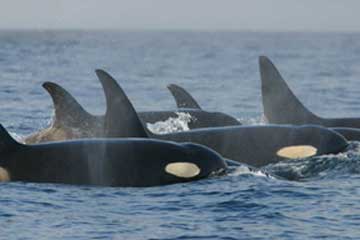
Did grandma pinch you on the cheek too? (photo credit: NOAA)

The researchers began by developing a mathematical model that would allow them to draw general conclusions about age-related changes in the genetic relatedness of long-lived social animals as individual group members disperse, die and are replaced over time. (For those interested in such things, they based their approach on the “infinite island” model that is commonly used in considering the process of gene flow among a set of subpopulations.)

With their model in hand, the researchers analyzed three relevant social scenarios:

  1. Males Move On. In the large majority of social animal societies, males tend to move on as they mature, ultimately mating with unrelated females they find within new social groups. In this type of society, the researchers’ model determined that, over time, an older female will become less related to her group mates as she ages. She starts out in a highly related group that includes her father, but over time her older male relatives die, and her sons, and the sons of her relatives, leave the group and are replaced by unrelated males from other groups. Her average genetic relationship to the females in the group doesn’t change much, but since her relatedness to local males declines, overall her genetic connection to the group lessens as she gets older.
  2. Females Move On. Conversely, evidence suggests that during the course of human evolution, women were the ones that were more likely to move on to start families in new environments. (In support of this proposition, Johnstone and Cant cite the behavior of other great apes, human DNA variation patterns, and social patterns among human forager societies, evidence they concede is “far from conclusive.”) In this type of society, where males stay at home and females disperse, an older female tends to become more related to her fellow group members over time. She begins her reproductive life in new surroundings where she has few genetic ties to those around her, but as she produces sons who are likely to remain in the group, her relatedness to local males builds up over time. Again, because the degree of her relatedness to other females stays fairly constant – she starts out with little relation to the females in her new group and this doesn’t change much as her daughters leave and are replaced by new unrelated females – her overall genetic connection to the group increases as she ages.
  3. Males and Females Stay Put, But Mating Occurs Between Different Groups. In the resident killer whale and pilot whale societies studied, males and females stay with their natal groups for life, but mating occurs non-locally, that is, between females and males from other groups. In this final scenario, even though the social structure is quite different from “female moves on” societies, the results are the same: an older female tends to become more related to her fellow group members over time. A female begins her reproductive life separate from her father and her paternal relatives (who belong to a different group), but as she has male offspring her relatedness to males within her group grows over time. Once again, her relatedness to other females stays more or less constant, meaning that her overall genetic affinity with her group increases as she grows old.

Thus for human and certain whale societies, in contrast to most other social animal groupings, a female’s relatedness to her group increases as she becomes older.

Johnstone and Natal next considered the fitness costs of reproduction. They noted that having children imposes costs on other breeders within one’s group due to increased competition for food, resources and mating opportunities, whereas cessation of reproduction confers a benefit, due to a corresponding reduction in competition. Then, using a using a statistical model involving an “inclusive fitness” approach to generate quantitative results for the three scenarios described above, they reached a not-surprising conclusion: in scenario 1 (males move on), it is less advantageous for older females to “help” younger generations by stopping their own breeding, whereas in scenarios 2 and 3 (the human and toothed whale scenarios), non-breeding “help” is favored by evolution, as it confers advantages on a younger generation that is progressively more related to the older helper.

So there you have it. Does Johnstone and Natal’s analysis sound plausible? It certainly offers a neat way of finding an underlying similarity in great ape and whale societies that may explain menopause and support the grandmother hypothesis in these very distinct groups.

No wonder cetaceans often look like they’re grinning – they’ve been spoiled by their grandmothers!

_____

ResearchBlogging.org1See, e.g., Lahdenperä, M., Lummaa, V., Helle, S., Tremblay, M., & Russell, A. (2004). Fitness benefits of prolonged post-reproductive lifespan in women Nature, 428 (6979), 178-181 DOI: 10.1038/nature02367; Shanley, D., Sear, R., Mace, R., & Kirkwood, T. (2007). Testing evolutionary theories of menopause Proceedings of the Royal Society B: Biological Sciences, 274 (1628), 2943-2949 DOI: 10.1098/rspb.2007.1028.

2See, e.g., Kachel, A., Premo, L., & Hublin, J. (2010). Grandmothering and natural selection Proceedings of the Royal Society B: Biological Sciences, 278 (1704), 384-391 DOI: 10.1098/rspb.2010.1247.

3Johnstone, R., & Cant, M. (2010). The evolution of menopause in cetaceans and humans: the role of demography Proceedings of the Royal Society B: Biological Sciences, 277 (1701), 3765-3771 DOI: 10.1098/rspb.2010.0988.
The Honeybee Waggle Dance – Is it a Language?

The Dance

More than half a century ago, Karl von Frisch rocked the world of behavioral biology with his conclusion that the honeybees (Apis mellifera) can actually communicate the distance to and direction of valuable food sources through an elaborate “waggle dance.” In what later led to his receipt of the Nobel Prize in Physiology or Medicine, von Frisch determined that bees recruited by this dance used the information encoded in it to guide them directly to the remote location of the resource.

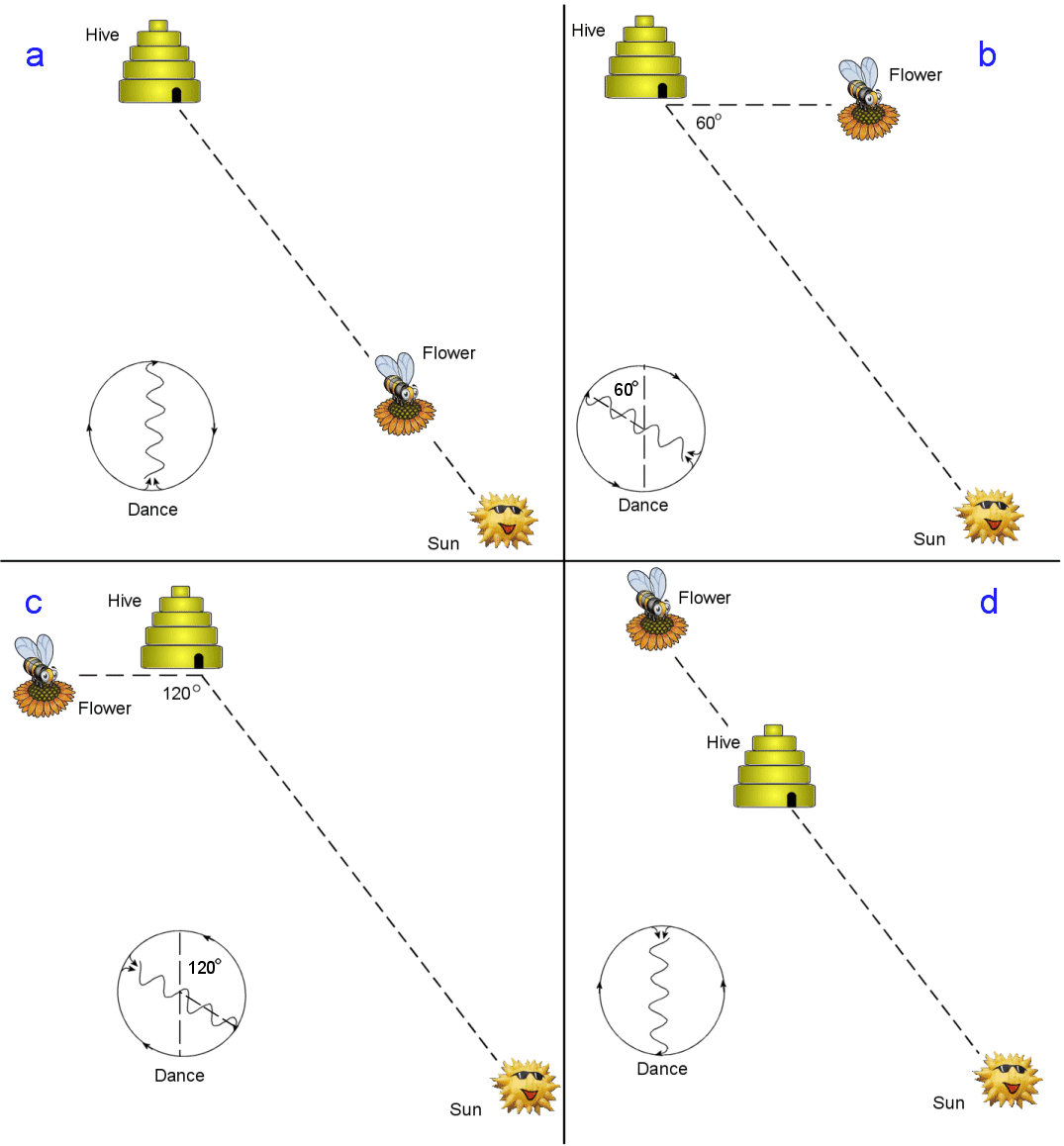
In the typical waggle dance, a foraging worker bee who has found by a rich food source returns to the hive, is greeted by other bees, and commences dancing on the vertical comb surface within the dark nest (in other species of bee, like Apis florea, the dance is performed on a horizontal surface in direct view of the sun and/or other landmarks). She dances in a figure-eight pattern, alternating “waggle runs,” during which she vigorously waggles her body from side to side in a pendulum motion at about 13 times per second as she moves forward in a straight line, with return phases in which she circles back to the approximate starting point of the previous waggle run, alternatingly between clockwise and counter-clockwise returns. Here’s a video of a bee doing the waggle dance:

As the video indicates, the honeybee’s dance encodes key information about the resource. For instance, as she performs waggle runs on the vertical comb surface, her average body angle with respect to gravity corresponds to the direction of the food source relative to the current position of the sun (the sun’s azimuth). Accordingly, if the food source lies in the exact direction of the sun, she will waggle straight upwards; if the food lies, say, 30 degrees to the right of the imaginary line to the sun, she will angle upwards 30 degrees to the right of vertical. Also, the duration of her waggling runs is directly linked to the flight distance from the hive to the food source, with (for many bee subspecies) every extra 75 milliseconds of waggling adding roughly another 100 meters to the distance. Further, the more attractive the destination, the longer and more vigorously she dances, and the more quickly she returns for the start of each waggle run. Depending on the richness of the food source, she may perform up to 100 waggle runs in a single dance.

Next week ... the Tango!

Cognitive Complexity

It seems, then, that honeybees have evolved an extraordinary complex form of symbolic communication about distant resources, one that is beyond the capabilities of virtually every other species except for humans. Not bad for an insect.

The cognitive tasks implicated by the waggle dance are not insignificant: the dancer must remember the location and characteristics of a specific site she has seen on her foraging trips, and translate this information into the appropriate dance characteristics. She must also remember and take into account the position of the sun, and update that position as the sun moves (the ability to compensate for the sun’s movement by memory has been documented by researchers observing dances over several hours of overcast weather, when there are no celestial cues to be seen). The observing bees must “read” the dance, translate their sensory input into a resource location, and then find the resource, navigating as necessary around hills, houses and other obstacles.

In fact, the feat is so stunning that von Frisch’s findings were initially met with significant skepticism and controversy.1 At this point, the controversy has essentially been settled, with scientists recognizing that there is compelling evidence that honeybees really do communicate and act on the information encoded in the waggle dance, even though uncertainty remains regarding exactly which signals (tactile, odor, vibrations, air flows, etc.) the observing bees use to translate the dance into actionable information regarding the resource location.2

Is the Waggle Dance a “Language”?

So, the waggle dance is an extremely complex communication system, but is it a language?

Eileen Crist, Associate Professor in Science and Technology in Society at Virginia Tech, makes a rather compelling case that the waggle dance embodies many of the attributes of a true language.3 After noting that the waggle dance is always performed in front of an audience and is clearly communicative in nature, she describes some of the principal features that support its being characterized as a language:

  1. Rule-Governed. If a communication system is to be considered linguistic in nature, it generally must be based on a set of rules that are structured and used with regularity. This is the case with the waggle dance: the dance is always performed in a designated place within the hive, it is never done unless an audience is present, and it always follows a standard template for conveying direction, distance, and desirability. While the general rule is that the waggle dance is to be used to inform other bees about sources of nectar, when the colony has a special requirement (e.g., locating water when the hive is overheating or finding a new home when part of the colony must relocate) then the rules dictate that the dance purpose switches to this pressing need. Also, the general rule is that foragers dance about rich, reliable and near resources, but in times of need the “dance threshold” for less desirable resources is lowered.
  2. Complexity. A key dimension of a true language is its complexity, as it is unlikely that a communication system based on just a few rules will qualify as a language. The bee dance rules are not only extremely intricate, but they are applied in a versatile and complex fashion to respond to differing environmental factors and hive requirements.
  3. Stability and Dynamism. A core feature of human language is that a relatively fixed and stable syntax enables the dynamic generation of an indefinite number of new sentences. Similarly, while the waggle dance always takes the same recognizable forms, it “accommodates different purposes, shifting circumstances, urgent needs, and unprecedented events; while structurally identical every time, it is also contextually flexible.”
  4. Symbolic. By itself, the symbolic nature of the waggle dance has led to its being called a language. The dance symbolically represents conditions existing in the real world, actually enabling human researchers to “read” the information encoded in the dance to find specific honeybee food sources and even to design experiments about honeybee foraging behavior.
  5. Performative. According to linguistic theory and as first articulated by John Austin, languages not only describe the world, they also include what he called “performative” utterances, which are used to carry out actions.4 Not only is the waggle dance symbolically descriptive, but it has performative force in the sense that it elicits action from the bees who watch it (as Crist notes, the performative nature of the waggle dance is implicit in the way in which scientists “routinely deploy a vocabulary of announcing, reporting, summoning, recruiting, soliciting, inviting, commanding, and guiding” in describing it).

James Gould, Professor of Ecology and Evolutionary Biology at Princeton University, summarized both the controversy over the issue and the nature of honeybee dance communication as follows:

Some of the resistance to the idea that honey bees possess a symbolic language seems to have arisen from a conviction that “lower” animals, and insects in particular, are too small and phylogenetically remote to be capable of “complex” behavior. There is perhaps a feeling of incongruity in that the honey bee language is symbolic and abstract, and, in terms of information capacity at least, second only to human language.5

Gould estimates that the waggle dance is capable of communicating at least 40 million unique messages (“sentences”), more than 10 times as many as any other animal except for man.6

Not surprisingly, not everyone agrees that the waggle dance constitutes a true language. For example, Stephen Anderson, Professor of Linguistics at Yale University, acknowledges that honeybee dance communication is elaborate and cognitively rich, but concludes that it is unlike human natural language in that, for example, it is genetically fixed rather than learned through environmental interactions, it lacks a syntax in which the order of the communicative elements (words or actions) impacts meaning, and there is a close correspondence between the structure of the dance signals and the nature information to be conveyed (e.g., orientation of the waggle run and the direction to the resource).7

Some bees are better at the dance than others...

To Bee or Not to Bee

In the end, there will probably always be debate and disagreement over whether the waggle dance is a true language. Clearly, the waggle dance and human language are vastly different communication systems, and how we label the waggle dance in human terms may be missing the point. From the honeybee standpoint, the dance serves its purposes and contains all of the communicative nuances that the bees need within their environment. Maybe, the real point is that we should sit back and appreciate the fact that the honeybee, a small insect with tiny brain, has been able to evolve a system of communications that is so sophisticated that it has challenged human linguists to wrestle with the question of what distinguishes a true language and whether human language is really so unique.

Anyhow, time to stop droning on and sign off!

_____

1See, e.g., Gould, J. (1975). Honey bee recruitment: the dance-language controversy Science, 189 (4204), 685-693 DOI: 10.1126/science.1154023.

2See, e.g., Landgraf, T., Rojas, R., Nguyen, H., Kriegel, F., & Stettin, K. (2011). Analysis of the Waggle Dance Motion of Honeybees for the Design of a Biomimetic Honeybee Robot PLoS ONE, 6 (8) DOI: 10.1371/journal.pone.0021354; Gil, M., & De Marco, R. (2010). Decoding information in the honeybee dance: revisiting the tactile hypothesis Animal Behaviour, 80 (5), 887-894 DOI: 10.1016/j.anbehav.2010.08.012.

3Crist, E. (2004). Can an Insect Speak?: The Case of the Honeybee Dance Language Social Studies of Science, 34 (1), 7-43 DOI: 10.1177/0306312704040611.

4Hymes, D. (1965). : How to Do Things with Words . John L. Austin. American Anthropologist, 67 (2), 587-588 DOI: 10.1525/aa.1965.67.2.02a00970.

5Gould, J. L. Ibid. at 692.

6Gould, J. L. Ibid. at note 37.

7Anderson, S. R. 2004. Doctor Dolittle’s delusion: Animals and the uniqueness of human language. New Haven, Conn.: Yale University Press. ISBN-13: 978-0300115253.

Elephant Insight

With each passing week, it seems like we’re finding out more and more about how smart elephants are. Now, in addition to their other cognitive abilities, it turns out that elephants can have “aha!” moments of insight as they face puzzling dilemmas. [No, not a-ha as in 1980s synth-pop from Norway; if you’re looking for an early MTV a-ha moment, you should probably go here!]

Elephants have the largest brains and the greatest volume of cerebral cortex of all terrestrial mammals. They live in elaborate matriarchal societies that include long-lasting relationships, close family bonds, and complex social groupings that change over time. They squabble and negotiate with each other over travel directions; they flirt, show empathy towards one another and solve problems cooperatively. They are one of the very few animals that can recognize themselves in mirrors (more about self-recognition testing here and here). True to their reputations, they have terrific memories, are adept at making and using tools, are logical thinkers, and even appear to mourn their dead in a “ceremonial” manner suggesting they may have a real awareness of the separate lives and experiences of other elephants.

Until now, however, on the few occasions when elephants have been tested for insightful problem solving abilities, they have been performed poorly. In these previous tests, the elephants failed to use their trunks in order to gain access to food treats that had been placed just beyond reach (for example, by using a stick grasped in the trunk to reach out for the food, or by pulling on a retractable cord with their trunks in order to reel in the food reward).

In a paper just published online on August 18th in PLoS ONE, a research team led by Preston Foerder and Diana Reiss of the City University of New York reported on its own revelation that led to a breakthrough in tests for elephant problem-solving insight. The researchers surmised that the problem with prior testing was not that elephants were incapable of insight, but rather that the tests had called for the elephants to act in ways that undermined their ability to use their trunks as effective sense organs during the task:

We believe that the problem in previous studies has been in treating the elephant trunk as a grasping appendage analogous to a primate hand. Although the trunk is a highly manipulable appendage, in food foraging its function as a sensory organ may take precedence. The elephant has an extraordinary sense of smell, and the tip of the trunk is as highly enervated as a human fingertip…. When a stick is held in the trunk, the tip is curled backwards and may be closed, prohibiting olfactory and tactile feedback…. We posit that previous failures to observe insightful problem solving in elephants is not indicative of a lack of cognitive ability but rather is due to the reliance on problem solving tasks that precluded the use of the trunk as a sense organ.

To address this issue, the researchers set up a series of experiments designed to allow elephants to keep their trunks free while facing problem-solving challenges. They tested three Asian elephants (Elephas maximus), two adult females and a 7-year-old juvenile male, at the Smithsonian National Zoo in Washington, DC, with the juvenile male, Kandula, soon emerging as the rock star problem-solver.

In the first experiment, the researchers dangled enticing fruit rewards from a cable they had placed across the elephant yard, including from positions that were just beyond trunk-reach. After leaving a large plastic cube and some other objects in the yard, they let Kandula into the yard for sessions to see whether he would figure out how to obtain the dangling food reward. While Kandula had previously played with the cube as an enrichment toy, he had no prior training in pushing large objects or in standing on them to reach for things.

During an initial six sessions, each lasting 20 some minutes, Kandula showed interest in the food dangling above his reach, played with the cube, moved it on several occasions, and once even stood on it briefly, but never tried to reach out for anything while standing on the cube.

Then, during the seventh session, Kandula suddenly had his moment of epiphany: he rolled the cube into position beneath the hanging food, stood on the cube with his front two feet, stretched out his trunk, and grabbed his prize.

Kandula - Insightful and Now Less Hungry Elephant

From then on, Kandula was off to the races. In the next session, he not only rolled the cube over and stood on it to reach the fruit again, he also started using the cube as a tool to reach other objects: e.g., standing on it to explore the inside of an enrichment object and, after rolling it to the edge of the yard, using it as a platform to reach for blossoms on an overhanging tree branch.

Moreover, Kandula showed he was able to apply his insight to new situations. For example, in a second experiment, the researchers used the same general setup, but began moving the cube around from place to place, including behind fences and in locations that Kandula couldn’t see as he entered the yard. In each case, Kandula found the cube and rolled it over to capture his food reward. Here’s a video of Kandula retrieving the cube from behind a fence:

Next, the researchers replaced the cube with a large tractor tire – in three of four sessions Kandula used the tire as a tool, rolling it to the proper place, and then standing on it to obtain the food reward.

In a final experiment, the researchers replaced the cube and the tire with a variety of other objects, including large plastic balls, discs, cones, a barrel lid and three cutting boards that would have to be stacked to form a platform for Kandula to reach the food. While Kandula didn’t stack all three boards (he did stack two, though), he experimented with various approaches such as standing with one foot on separate objects. Ultimately, he reached the food by standing on a plastic ball, a solution that surprised the researchers since he had never placed his weight on a similarly unstable platform before.

So, to summarize, Kandula demonstrated sudden insight – using a tool to solve a problem in a novel and spontaneous fashion, without evidence of prior trial and error learning. Further, he showed that he could repeat, transfer and extend his technique in subsequent sessions.

If you’re an elephant, please feel free to give yourself a pat on the back. Job well done!

_____

1Foerder, P., Galloway, M., Barthel, T., Moore, D., & Reiss, D. (2011). Insightful Problem Solving in an Asian Elephant PLoS ONE, 6 (8) DOI: 10.1371/journal.pone.0023251.

The “Yellow Snow” Test for Self-Recognition

The Mirror Self-Recognition Test

The mirror self-recognition (MSR) test has long been used to assess whether an animal is self-aware, whether it has a sense of self. In the classic version of the test, a colored mark is placed on an animal’s body in such a way that it can only be seen in a mirror. To pass the test, the animal must spontaneously use the mirror to detect the mark and then scratch or otherwise direct activity toward it, thereby indicating recognition of the image in the mirror as itself and not some other animal.

Not only is self-recognition considered to be an indication of higher cognitive functioning, but it has also been seen as a potential springboard to even more sophisticated abilities, such as being able to attribute mental states to other individuals (sometimes referred to as “theory of mind”).

To date, only a relatively few animals have passed the MSR test, including certain primates, dolphins, elephants, and, as we saw in a prior post, magpies.

But is the test itself biased? We humans rely heavily on our eyesight and may naturally – anthropocentrically – have settled on a test that is based on visual interpretation.

What about animals who rely more on their sense of smell – dogs, for instance? Well, Marc Bekoff, Professor Emeritus of Ecology and Evolutionary Biology at the University of Colorado, Boulder, wondered about this too.

The Yellow Snow Test

Over a five year period, Bekoff performed a study1 in which he diligently tracked the behavior of his own dog, Jethro, when Jethro encountered clumps of snow saturated with his own and other dogs’ urine (“yellow snow”) while walking freely along a bicycle path in Colorado on winter mornings.

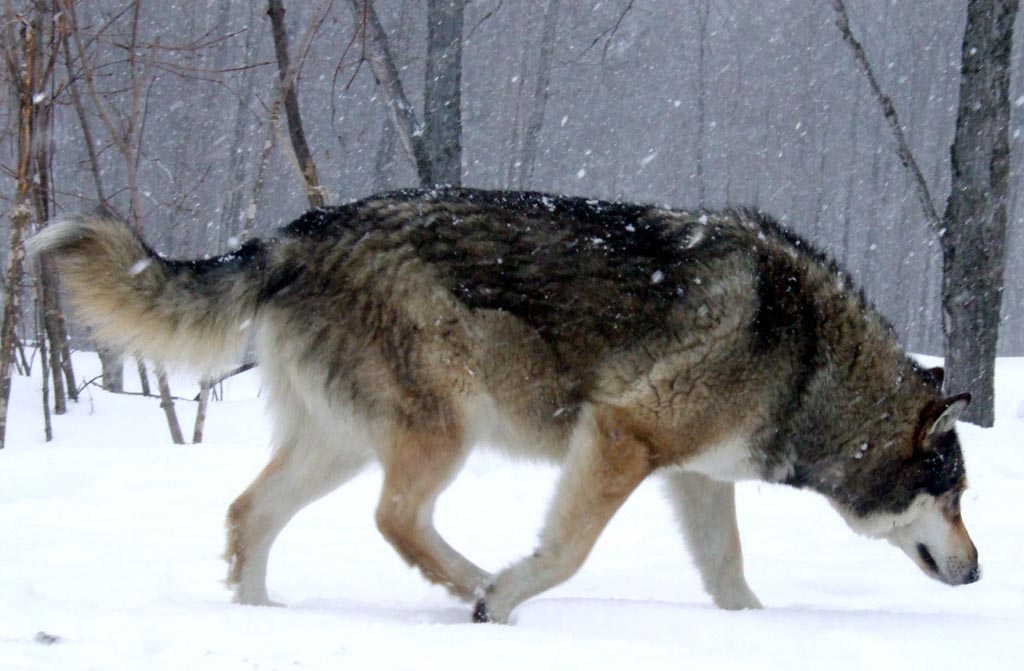
Snow pile, snow pile, on the ground, who’s the finest smelling hound? (photo: Walter Jeffries)

Bekoff would wait until Jethro (a neutered male German Shepherd and Rottweiler mix) or other known female and male dogs urinated on snow, and then scoop up the clump of yellow snow as soon as Jethro was elsewhere and did not see him pick it up or move it (Bekoff used clean gloves each time and took other precautions to minimize odor and visual cues). Bekoff then moved the yellow snow varying distances down the path so that Jethro would run across the displaced urine: (i) within about 10 seconds, (ii) between 10-120 seconds later, or (iii) between 120-300 seconds later. After Jethro arrived, Bekoff recorded how long he sniffed at the yellow snow, whether he urinated over it using the typical male raised-leg posture, and whether urination immediately followed the sniffing (“scent marking”).

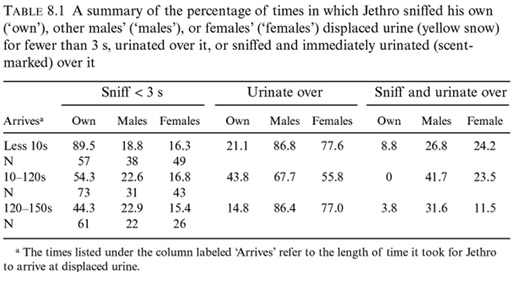
After compiling and statistically analyzing the data, Bekoff found that Jethro paid significantly less attention to his own displaced urine than he did to the displaced urine of other dogs. For example, when Jethro encountered the yellow snow within 10 seconds, he sniffed for longer than 3 seconds only about 10% of the time when it was his own urine, compared to over 80% of the time when it was other dogs’ urine. (Jethro did tend to have longer sniffs at his own urine when he arrived after more than 10 seconds, but in all scenarios he still sniffed significantly longer at the other dogs’ urine.) Likewise, he very rarely urinated over or scent-marked his own yellow snow, but frequently did so with the yellow snow of other dogs, particularly other males.

The following table summarizes the data collected (note that the reference to “120-150s” in the Arrives column appears to be erroneous, and should instead read “120-300s”):

In sum, Jethro’s behavior clearly demonstrates that he was able to discriminate the scent of his own urine from that of other dogs. Of course this is just one set of tests on one dog, but would it surprise anyone if other dogs showed similar abilities?

Is there a fundamental difference between an animal recognizing its own image in a mirror and one recognizing its own scent in yellow snow? There certainly are different cognitive process involved (Bekoff himself has suggested that the yellow snow test may be more indicative of a sense of “mine-ness” in dogs than of a sense of “I-ness”2).

At a minimum, though, the yellow snow test stands as a useful warning that we humans need to be careful not to make quick judgments about animal intelligence or cognitive capacity (or lack thereof) based on tests that are well-suited to humans, but that fail to match the skills and abilities of the particular animal.

_____

1Bekoff, M. (2001). Observations of scent-marking and discriminating self from others by a domestic dog (Canis familiaris): tales of displaced yellow snow Behavioural Processes, 55 (2), 75-79 DOI: 10.1016/S0376-6357(01)00142-5.

2Bekoff, M. Considering Animals—Not “Higher” Primates. Zygon 38, 229-245 (2003).

Be Kind to Cattle

The AnimalWise Soapbox

In a more ideal world, cattle would be free to lead lives consistent with their ancestry as nomadic grazers covering wide ranges. Of course, this isn’t a perfect world, particularly for the cows and other farmyard animals whose entire existence we have repurposed into the provision of meat and dairy products.

Without wading too deeply into the morass of moral issues raised by how we humans have transformed the environment and put other animals to work to serve our needs, it’s pretty clear that we have assumed a responsibility for the well-being of these animals who depend on us for everything.

Now, jumping down from the soapbox, what’s interesting is that, even if we were to disavow any ethical obligation to our bovine helpers, research continues to underscore how much it is in our own selfish interest to treat them with kindness and care.

A Cow by Any Other Name…

For example, one recent study1 that enjoyed some popular press attention found that named cows were better milk providers. That’s right, cows with names.

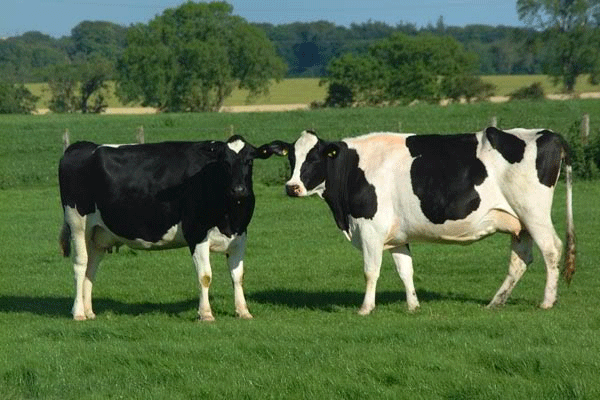
Uh oh, here comes what's-his-name...

In this study, researchers led by Catherine Bertenshaw and Peter Rowlinson of Newcastle University sent a detailed survey to every fourth dairy farm in England and Wales (1,000 in total), asking, farmers a number of questions regarding their attitudes toward cattle, how they managed dairy herds, and their perceptions of cows’ emotional and cognitive capacities. The response rate was 56% (52% after weeding out respondents who had recently ceased farming), with 90% coming from experienced stock managers who had worked with cattle for more than 15 years.

As noted above, cows don’t appear to enjoy toiling away in obscurity. On 46% of the surveyed farms, cows are called by name, and these cows produced an average of 258 liters more of milk per 10 month lactation period than did their anonymous peers (7938 liters versus 7680 liters). Moreover, on farms where the stock manager thought it important to know every individual animal, heifers had a 197 liter higher average milk yield over their first lactation than on farms where the manager thought it wasn’t important (6931 liters versus 6734 liters).

Does this mean that cows recognize their own names and appreciate it when they hear themselves being singled out?

While this is possible, the more likely explanation is that farmers who name and individually recognize dairy cows are more likely to treat them well. Bertenshaw and Rowlinson cite previous research finding attitude to be a reliable predictor of a person’s behavior around animals and that those having a positive attitude towards cows are “likely to handle animals patiently, to believe that regular positive contact is important, and to show positive behaviors towards the cows.”

Overall, the survey results indicate that – at least from the farmers’ perspective – there is a relatively positive relationship between dairy cows and stock persons on UK farms. Ninety percent of the respondents thought that cows had “feelings,” only 21% believed that dairy cattle were fearful of humans, and 78% thought cows were intelligent. (It would be interesting to see what percent think that their human coworkers were intelligent.) Also, on a somewhat reassuring note, 44% gave “love of cows” as a reason why they chose to work with cows.

Obviously, this is a subjective survey from one viewpoint (no word on when the cows will be receiving their questionnaires), but it provides important insight into the importance of our nurturing our relationships with other animals … and lessons that will serve us well when the Revolution comes (hilarious Dana Lyons video below):

♫  ♫  We will fight for bovine freedom, and hold our large heads high!   ♪  ♫  ♪

_____

1Bertenshaw, C., & Rowlinson, P. (2009). Exploring Stock Managers’ Perceptions of the Human–Animal Relationship on Dairy Farms and an Association with Milk Production Anthrozoos: A Multidisciplinary Journal of The Interactions of People & Animals, 22 (1), 59-69 DOI: 10.2752/175303708X390473.

Pantomiming Primates

When considering language abilities in non-human animals, it pays to keep in mind that spoken words are not the only path to sophisticated communication. For example, while great apes like chimpanzees and orangutans may be limited in their ability to adapt their vocalizations to human speech, they are able to control their hand movements very well, and can engage in extremely expressive and effective gesturing behavior.

In a thought-provoking study first published online last year and now appearing in the August 23, 2011 issue of Biology Letters1, two Canadian researchers, Anne Russon of Glendon College and Kristin Andrews of York University, reported on their extensive review of data regarding instances in which orangutans in Borneo have used “pantomime” to communicate with their target audiences.

What part of "give me more food" don't you understand? (photo credit: Tom Low)

Russon and Andrews mined 20 years’ data that had been collected during systematic observational studies on the behavior of ex-captive orangutans as they underwent rehabilitation and were living free or semi-free lives in the forest. After reviewing original field notes and videos covering over 7,000 hours of observation, they identified 18 salient pantomime cases (14 addressed to humans and four to other orangutans) in which orangutans physically acted out messages in order to communicate specific goals.

In most of the cases, the orangutans used pantomime to provide additional or better information after an initial attempt at communication had failed – for example, by being more specific about an action, item or tool requested; by offering better tools for a requested task after a previous tool had been ignored; by pretending to be unable to perform a task after a request for help had been ignored; or by clarifying friendly intent after non-aggressive approaches had been refused.

A few specific examples will help to illustrate how the orangutans used pantomime to achieve specific communication goals:

  • An adolescent female named Siti, who had partially opened and eaten a coconut, handed it to a technician who in turn handed it back to her, gesturing to her that she should finish the job. She proceeded to briefly, weakly and ineffectively poke at the coconut (very much in contrast to her prior behavior), before handing it back to the technician. When he again refused to help her, she used a palm petiole (stalk) to chop at the coconut repeatedly, as one would with a machete. Russon and Andrews described their interpretation of the incident in the data supplement to their paper:

After [the technician’s] first refusal she faked inability to do the job herself; after the second refusal she elaborated her request by acting out what she wanted done, specifying what tool and target to use and how to use the tool.  She acted out the actions she wanted of her partner, which included a skill that was not in her own repertoire (machete use).  Given the complex conjunction of conditions and the specificity of her request, Siti’s pantomime must have been invented on the spot even if she was familiar with all constituent elements.

Fortunately, you can see this incident for yourself, as there’s a video of Siti and the coconut – enjoy!

  • After a three year old female named Kikan had hurt her foot on a sharp stone, a research assistant removed the stone and dripped latex from the stem of a fig leaf on the wound to help make it heal faster. After that, Kikan (who had previously not been particularly friendly with the assistant, hitting or trying to bite her when she passed by) approached the assistant in a friendly manner on a number of occasions, holding up her wounded foot for the assistant to see. On one specific occasion, Kikan picked up a leaf, pulled the assistant’s hand until she paid attention, and then acted out the leaf treatment the assistant had given to the foot. (This is not only interesting for its communication content, but it could be an indication of episodic-like memory (mental time travel), a topic that Felicity Muth recently discussed in some detail in two Scientific American blog posts, here and here).
  • An adult female named Unyuk played with forest assistant who pretended to give her a haircut with a Swiss Army Knife. While they played she noticed a backpack, an item regularly stolen by orangutans in hopes of finding food. Unyuk made no immediate move for the pack – instead she continued to act out her role in the haircutting game, grabbing the hair on top of her head and inviting the assistant to continue playing as she gradually moved sidewise and closer to the pack. Once she had a free path, she lunged and made a grab for the unattended pack. (This was one of seven pantomimes that the researchers labeled as deceptive, where the actor feigned an inability, an interest or an intent in order to obtain help, distract, or express friendly intent and facilitate reconciliation.)

Russon and Andrews believe that some of the pantomime cases contain attributes of natural language:

including compositionality (large meaningful units are composed of smaller meaningful units…), systematicity (the actions and entities pantomimed are meaningfully rearranged following predictable patterns…) and productivity (…unique creations of the moment). Thus, orangutans can communicate content with propositional structure and have the kind of cognitive capacities with constituent structure typically associated with linguistic capacities.

Although spontaneous pantomiming appears to be fairly rare among orangutans (again, a total of 18 examples were unearthed from 20 years’ of data), the underlying data came from studies that were not focused on communication, and the researchers believe that other studies may have missed similar pantomiming to the extent that they focused on the functional aspects of gestures rather than the significance of pantomime as a medium for communication.

In any event, the study offers an eye-opening lesson in how sophisticated – to the point of being linguistic – non-verbal communication can be. If nothing else, we should not be too overconfident if we ever have a chance to play charades against a team of orangutans.

_____

1Russon, A., & Andrews, K. (2010). Orangutan pantomime: elaborating the message Biology Letters, 7 (4), 627-630 DOI: 10.1098/rsbl.2010.0564.

What’s Up With the Male Dolphins of Shark Bay Who Don’t Use Sponges?

As discussed in detail in a recent AnimalWise post, a group of female bottlenose dolphins in Shark Bay, Western Australia has enjoyed quite a bit of attention of late for creatively using marine basket sponges as tools to assist them in rooting out bottom-dwelling fish. While the spotlight has been on the females, not much has been said about the males who (despite growing up fin-to-fin with sisters who learn how to use sponges) generally do not become spongers. The researchers studying the sponging behavior have not explored the lack of male sponging in depth, but have hypothesized that the males may be too focused on establishing and maintaining “alliances” to be able to devote the time and effort necessary to become specialized sponge-using foragers.1

I can't figure out that sponging thing either... (photo credit: Shark Bay Dolphin Project)

So what are these male alliances all about, and why are they so important?

Fortunately, a study published in the August 23, 2011 issue of Biology Letters2 provides some new detail and insight into male bottlenose dolphin alliances in Shark Bay.

In a surprise to most likely no one, the alliances are all about sex – maximizing a male’s chances of being able to mate. What is surprising, however, is the level of complexity of these male relationships.

Only humans and Shark Bay bottlenose dolphins are known to have multiple-level male alliances within a social network.

The researchers already knew that the Shark Bay males formed two distinct levels of alliance: first-order groupings of three (or, less frequently, two) males who cooperate to establish and maintain “consortships” with females, and second-order alliances comprised of two or more primary groups who band together to take females from other alliances and/or to defend against such “theft” attempts.

In itself, this degree of cooperation is notable, as alliances and coalitions within social groups are considered to be a hallmark of social complexity (for a posting on female elephant social networks, see here, and for hyena social dynamics, see here). The researchers put it succinctly: “Only humans and Shark Bay bottlenose dolphins are known to have multiple-level male alliances within a social network.” (AnimalWise aside: why are males less apt to have multi-tier social networks than females? Ok, perhaps I don’t need to ask….)

Are you in my second-order alliance? This is all so complicated! (photo credit: Shark Bay Dolphin Project)

In this most recent study, the research team describes a Shark Bay male dolphin society that is even more complex than previously reported – one that actually has three levels of nested alliances among males.

The researchers spent over five years observing 121 frequently-seen males in over 500 consortships, concluding that amicable low-level associations (i.e., third-order alliances) were regularly occurring between specific second-order alliances and trios or other second-order alliances. The researchers further noted that fights involving multiple groups of males suggested that the third-order alliances, like the second-order ones, are employed in conflicts over females, as higher-order alliances could be useful if second-order partners were not around when rivals appeared.

A few other interesting research findings include:

  • There was a nearly continuous range in the size of second-order alliances, which had between six and 14 members.
  • There did not appear to be a relationship between the size of the second-order alliances and how stable (long-lasting) their component first-order trios were.
  • Most of the males participated in second-order alliances, but a subset of five trios did not. Of these five trios, four were comprised of older males whose prior second-order alliance partners had disappeared over time. The researchers surmised that these particular dolphins may have participated in third-order alliances because they were particularly in need of assistance in protecting and obtaining females.
  • Most of the first-order trios associated with only one second-order alliance, but a small subset (around 3%) associated with more than one second-order alliance.

So, to sum up, while (a subset of about 1/11 of) the female bottlenoses of Shark Bay are engaging in specialized tool use with marine sponges, the males are absorbed in complex Machiavellian political relationships and sexual maneuvering. Hmm, sounds a bit familiar.

_____

1Mann, J., Sargeant, B., Watson-Capps, J., Gibson, Q., Heithaus, M., Connor, R., & Patterson, E. (2008). Why Do Dolphins Carry Sponges? PLoS ONE, 3 (12) DOI: 10.1371/journal.pone.0003868.

2Connor, R., Watson-Capps, J., Sherwin, W., & Krutzen, M. (2010). A new level of complexity in the male alliance networks of Indian Ocean bottlenose dolphins (Tursiops sp.) Biology Letters, 7 (4), 623-626 DOI: 10.1098/rsbl.2010.0852.

Cornered Rat Waves Poisoned Tool, Attacker Flees in Terror!

Screams the tabloid headline…

Is this the plotline for a sequel to The Planet of the Apes in which mistreated lab rats rebel against cruel animal experimenters?

No, it’s actually an accurate (ok, a bit sensationalized) description of the way in which a small African rat has opportunistically found a way to deploy a poison tool (yes, tool, see below) to defend itself from predators.

For years, observers had suspected something was up with the African crested rat (Lophiomys imhausi): it moves sluggishly, acts fearlessly – practically inviting predators to attack it – and twists around to display boldly-patterned black and white bands along its flanks when it’s excited or threated. Some have speculated that these displays could be designed to mimic the appearance of the spiny porcupine or skunk-like zorilla, and over the years there have been reports suggesting that the crested rat may be poisonous, based in part on anecdotes about dogs retreating in fear from the small rodents or showing signs of having been poisoned after crested rat run-ins.

The mystery of the crested rat was cleared up last week, when a team of researchers led by Jonathan Kingdon of the University of Oxford’s Department of Zoology, published their findings about the rat’s unique set of defenses online in the Proceedings of the Royal Society B1.

Poisonous Defense

The researchers found that the crested rat gnaws and chews the roots and bark of local Acokanthera schimperi trees, which contain a substance called ouabain that is used in a traditional African arrow poison known to be capable of killing elephants by amplifying heart contractions. In chewing on the bark and roots, the rat creates a thick gel-like mixture of saliva and plant toxins, which it proceeds to slather onto the distinctively colored fur along its flanks. Here’s a video of the crested rat in which it briefly displays some grooming behavior:

As it turns out, the hairs of the fur in crested rat’s flank-area are highly specialized and extremely well-suited to deliver this self-applied poisonous mixture. These hairs are essentially perforated cylinders containing fiber-like strands that act as wicks, rapidly absorbing the slobbery, poisonous gel and drawing it up by capillary action. When the researchers chemically analyzed the hairs by infrared spectroscopy, they found strong evidence that that they were indeed absorbing and wicking up ouabain from the saliva mixture. Here’s another video of the hairs doing showing off their wicking abilities (that’s red dye in the video, not blood!):

Properly armed with this potent poison and benefited by some additional physical adaptations (an armored skull, enlarged vertebrae, and dense and thick skin), the crested rat enjoys a suite of defenses that allow it to stare down many a predator. The research paper describes the crested rat’s behavior when threatened:

Flaring of the fur is triggered by external interference or attack on the animal, whereupon white and black banding of the longer hairs on either side of the lateral line effects outlines of the tract in a bold white and black ‘target’ design. An aggravated rat pulls its head back into its shoulders and turns its flared tract towards its adversary as if actively soliciting an attack. This display may or may not be accompanied by vocalizations.

No, you don’t want to mess with Lophiomys imhausi.

The researchers characterize the crested rat’s poisonous defense as “toxicity by acquisition” never before reported for a placental mammal, noting that the closest mammalian analogy may be European hedgehogs, who are known to slather their spines with a mixture of toad venom and saliva, presumably to increase the pain and discomfort that their spines can inflict. By contrast, they point out that there’s no evidence that the crested rat needs to create any kind of a wound; rather, the would-be predator is poisoned when it bites – or even just mouths – the crested rat.

So, is the crested rat just a fascinatingly well-adapted defender, or is it a full-fledged tool user?

Tool Use

Tool user! (We at AnimalWise are never shy about making pronouncements … or speaking about ourselves in the “royal we.”)

Even poisonous rats like carrots! (photo credit: Susan Rouse)

Although not mentioned in the research report, the crested rat’s deployment of the plant toxins does indeed qualify as “tool use” as defined in Benjamin Beck’s Animal Tool Behavior, the most complete catalog of tool use in animals. The original 1980 version contained what remains one of the most widely-accepted scientific definitions of the term:

[T]he external employment of an unattached environmental object to alter more efficiently the form, position, or condition of another object, another organism, or the user itself, when the user holds or carries the tool during or just prior to use and is responsible for the proper and effective orientation of the tool.2

In 2011, this treatise was substantially revised and updated, and now contains the following definition:

The external employment of an unattached or manipulable attached environmental object to alter more efficiently the form, position, or condition of another object, another organism, or the user itself, when the user holds and directly manipulates the tool during or prior to use and is responsible for the proper and effective orientation of the tool.3

While it’s not all that much fun wading through the definitions (would they read better in verse?), the authors themselves make it clear that they would consider the crested rat’s “self-anointment” behavior to be tool use: the bark/roots are “unattached environmental objects,” the crested rat uses them to provide itself with a more efficient defensive position, it holds (carries) and manipulates the tool, and is responsible for properly and effectively orienting it.

In fact, the authors have come up with what they call modes of tool use, including several – Affix (attaching an object to the body with adhesive), Apply (attaching a fluid or object to the body without adhesive) and Drape (placing an object on the body temporarily) – which are directly applicable here.4

Moreover, considering only rodents (there are other examples elsewhere in the animal kingdom), the authors specifically call out a number of additional examples of “Affix, Apply, Drape” tool use by self-anointers: rice-field rats that apply the anal gland secretions of the weasel, one of their predators, presumably for concealment purposes; and California ground squirrels, rock squirrels, and Siberian chipmunks that anoint themselves with the scent of rattlesnakes by chewing shed snakeskin, applying dirt (substrate) the snake has been contacted with, and/or anointing themselves with snake urine, all most likely for “olfactory camouflage” purposes.5

So, there you have it. The crested rat is bold, it’s brave, it’s poison, and it’s a tool user!

_____

1Kingdon, J., Agwanda, B., Kinnaird, M., O’Brien, T., Holland, C., Gheysens, T., Boulet-Audet, M., & Vollrath, F. (2011). A poisonous surprise under the coat of the African crested rat Proceedings of the Royal Society B: Biological Sciences DOI: 10.1098/rspb.2011.1169.

2Beck, B.B. 1980. Animal tool behavior. New York: Garland (as quoted in Shumaker, Robert W.; Walkup, Kristina R.; Beck, Benjamin B.; Burghardt, Gordon M. (2011-04-28). Animal Tool Behavior: The Use and Manufacture of Tools by Animals (Kindle Locations 299-301). JHUP. Kindle Edition).

3Shumaker, Walkup; Beck & Burghardt 2011 (Kindle Locations 372-375).

4Id. (Kindle Location 601).

5Id. (Kindle Locations 1934-1943).

Reconciling and Reassuring Ravens

Welcome to the elaborate, conflict-laden world of raven (Corvus corax) social dynamics!

Expanding on prior research demonstrating that ravens sometimes console fellow ravens who’ve been victims of aggression, researchers have now found that ravens who’ve been in conflicts often reconcile with their former opponents, the first time this behavior has been seen in birds.

Reconciling Ravens

In a study published this year in PloS ONE1, University of Vienna biologists Orlaith Fraser and Thomas Bugnyar found that reconciliation behavior does indeed occur between ravens who’ve had conflicts, particularly when the participants share a valuable relationship. While this sort of post-conflict kiss-and-make-up behavior is believed to play an important role in reducing stress and repairing relationships in primates and certain other mammals, it hadn’t been found in prior studies of birds, leading researchers to hypothesize that perhaps birds use different strategies to maintain social harmony or that reconciliation isn’t so important for birds, as their most important relationships are their pair bonds with mates, where they may be able to avoid significant conflicts in the first place.

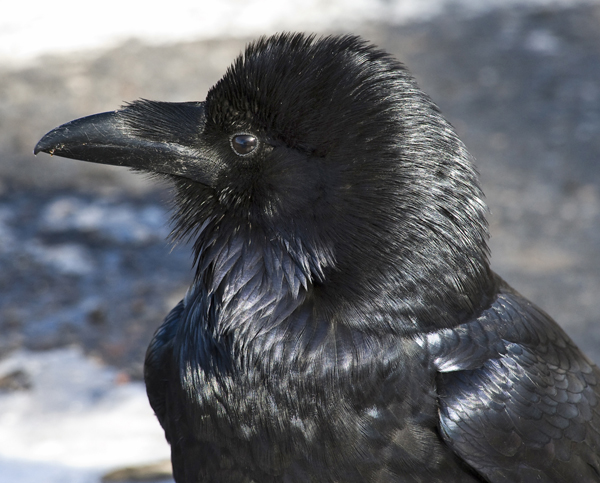
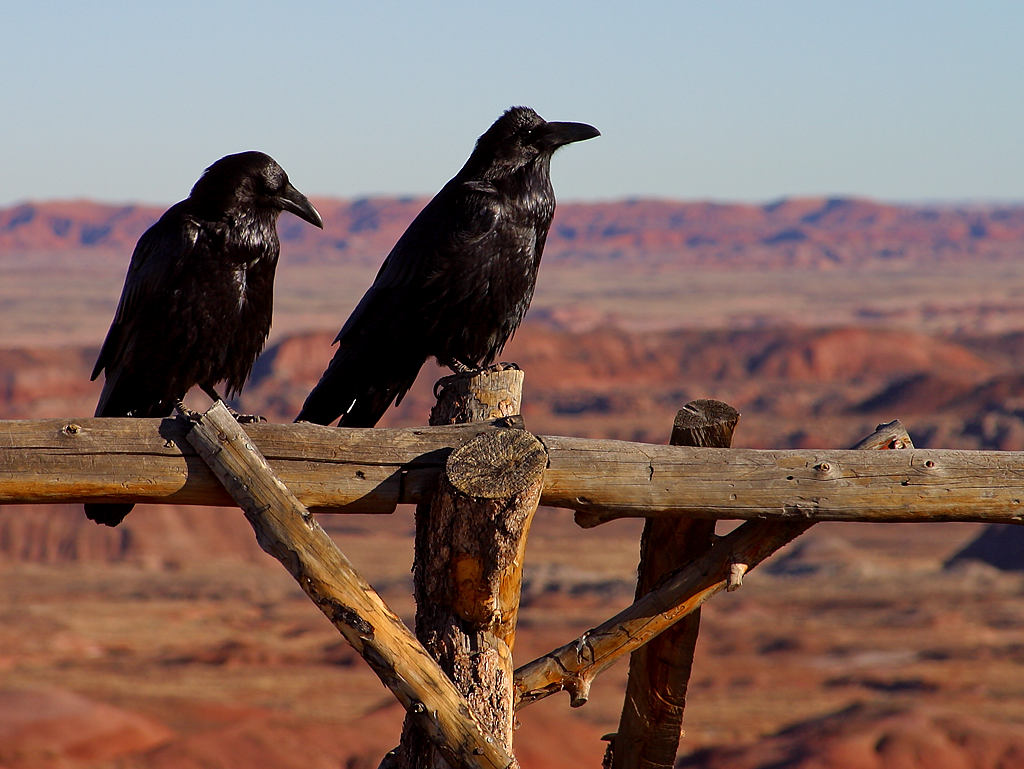
Will we fight again? Nevermore! (photo credit: Audubon Guides)

Fraser and Bugnyar studied seven captive sub-adult ravens (who were too young to have formed pair bonds) for 13 months, measuring their behavior after a total of 197 aggressive conflicts (defined as incidents involving hitting, chasing or forced retreat). They then documented “affiliative behavior” (friendly interactions involving contact sitting, preening, beak-to-beak or beak-to-body touching) after each conflict, and compared it to the behavior occurring during neutral periods when no aggression had taken place.

They found that reconciliation (friendly contact occurring within 10 minutes of the end of the conflict) occurred after 37 of 197 conflicts and, in a significant majority of the cases, friendly interactions took place more quickly after a conflict than during the matched control period. Moreover, birds who were related or in “high value relationships” (pairs who had previously been observed to preen or sit in contact with one another) were more likely to reconcile. Interestingly, neither the sex-combination of the opponents nor the intensity of the conflict (measured by whether the birds hit each other and how many times a bird was chased or forced to retreat) impacted the likelihood of reconciliation.

The researchers did note that the behavior of ravens in the wild might differ from those in captivity, and that additional study would be needed to determine whether other factors, such as a history of food sharing, might also impact reconciliation behavior.

This study is significant in that it suggests that, through a convergent process and despite very different evolutionary histories, ravens have developed conflict resolution strategies that are similar to those employed by primates, reconciling with each other to preserve valuable relationships and reduce the chance of further discord.

Reassuring Ravens

This 2011 reconciliation research follows closely on the heels of a comparably-structured study2 that Fraser and Bugnyar published in 2010, also in PLoS ONE, establishing that ravens may possess a sense of empathy (yet another trait once thought to belong to humans alone, at least before evidence of empathy began turning up in primates and other animals).

In the 2010 study, Fraser and Bugnyar attempted to measure whether “bystander” ravens (those who’d witnessed but not been involved in an aggressive conflict) would console the conflict victim through “affiliations” (the same sort of friendly behavior – contact sitting, preening, beak-to-beak or beak-to-body touching – as was measured in the more recent “reconciliation” study).

Don't worry, you're much better looking than he is... (photo credit: pdphoto.org)

This time, they studied 11 sub-adult and two adult ravens raised in captivity, reviewing behavior after a total of 152 conflicts and in matching control periods and finding that both spontaneous and solicited (that is, initiated by the victim) bystander affiliations were likely to occur after conflicts.

More specifically, they found that unsolicited bystander affiliations were more likely to occur after more intense conflicts as well as when the ravens were related or shared valuable relationships, factors which suggested to the researchers that the affiliations served a distress-alleviating, or consoling, function. Also, the bystanders generally had stronger ties to the victims than to the aggressors, leading the researchers to conclude that it was unlikely that the bystanders were either acting as proxies for the aggressor to try to repair relationship between the combatants or trying to protect themselves from redirected attacks from the victims.

Based on these findings, Fraser and Bugnyar concluded that the best explanation for the bystanders’ unsolicited friendly behavior was that they were acting to console and alleviate the distress of the victims. The summarized the significance of this as follows:

Consolation is a particularly interesting interaction because it implies a cognitively demanding degree of empathy, known in humans as ‘sympathetic concern’. In order for a bystander to console a victim, they must first recognize that the victim is distressed and then act appropriately to alleviate that distress, requiring a sensitivity to the emotional needs of others previously attributed only to humans.

While the researchers noted some caveats, including the fact that study didn’t attempt to record vocalizations and that research on ravens in the wild was still necessary, they concluded that “the findings of this study … suggest that ravens may be responsive to the emotional needs of others.”

So, before you leave, here’s a multiple choice test regarding the moral of this story:

  1. Ravens are super smart, just like crows, nutcrackers, magpies and other corvids.
  2. We keep finding more and more ways in which other animals are able to do “uniquely human” things.
  3. If you plan on having an argument with a raven, you should make sure you bring all your raven buddies with you for support.
  4. All of the above.

_____

1Fraser, O., & Bugnyar, T. (2011). Ravens Reconcile after Aggressive Conflicts with Valuable Partners PLoS ONE, 6 (3) DOI: 10.1371/journal.pone.0018118.

2Fraser, O., & Bugnyar, T. (2010). Do Ravens Show Consolation? Responses to Distressed Others PLoS ONE, 5 (5) DOI: 10.1371/journal.pone.0010605.

Archerfish: Shooting Dinner from the Sky

Today’s featured guest is the fantastic archerfish, who merits this honor for several good reasons:

  • It is totally cool.
  • It performs highly complex cognitive tasks with tremendous efficiency.
  • It raises interesting questions about how we define tool use.

Archerfish in Action

First, the totally cool.

The archerfish is a small fish that earns a living by shooting prey – insects, spiders and even small lizards – out of the sky, knocking them off twigs and leaves and into the water with an incredibly accurate jet of water launched from its mouth. Here’s a brief video that shows off the archerfish’s hunting skills:

Pretty incredible, huh?

Complex Calculations

And this brings us to the topic of the archerfish’s specialized and complex cognitive abilities.

As the video notes, because the archerfish hunts from beneath the water’s surface, it must be able to take into account both the bending of light at the surface of the water and the curvature of the water stream it shoots toward a target perched as much as two meters away. I’m not aware of any studies on how adept humans are at shooting water pistols at above-ground targets while snorkeling, but in an accuracy contest, I’m betting on the archerfish.

Additionally, in a report published in Current Biology1 in 2006, researchers from Erlangen-Nürnberg University in Germany showed that the archerfish not only aim accurately, but are able to save energy by estimating the size of their prey and modifying the amount of water they shoot. Using high speed photography, the researchers “discovered that archerfish transfer systematically larger maximum forces to larger targets … for any given size of prey, the fish apply about ten times the forces the adhesive organs of prey of that size could maximally sustain.”

Dinner is served! (photo credit: Peter Arnold)

In a later study published in Science2, the same research group elaborated on the efficiency and speed with which archerfish are able to swim to the precise spot where their prey will land after being hit by a water jet. (Because archerfish hunt in groups and are surrounded by other surface-feeders, they have to be able to swim to fallen prey extremely quickly or they will lose it to another hungry mouth.)

The researchers found that archerfish are able react to the motion of falling prey and start swimming to the correct spot at the correct speed within as little as 40 milliseconds, 1/20 of a second. Moreover, the archerfish accomplish this complex task (which requires them to process a host of variables, including the initial height of the prey, the speed of the fall, and the direction in which it is falling) using relatively few neurons and without reference to a priori information regarding the trajectory of the water jet that hit the prey. As the researchers summarized it, “our data show that even complex decisions can be made rapidly and accurately by a relatively small number of neurons.”

So, as we consider the meaning of the archerfish’s impressive skills, we should bear in mind that sophisticated cognitive behavior can evolve to address the particular tasks and challenges facing a species, and that even an animal with a small, non-mammalian brain can accomplish “super-human” cognitive feats if those feats help the animal to successfully adapt to its ecological niche.

Tool Use?

One final question is whether the archerfish is engaging in tool use when it shoots down its dinner with jets of water. We touched on this in the earlier post regarding the fearsome clam-smashing tuskfish, noting Jane Goodall’s definition of tool use as “the use of an external object as a functional extension of mouth or hand in the attainment of an immediate goal.” While there will undoubtedly continue to be debate and disagreement over the definition of tool use, some points to ponder for now include:

  • Does the water used by the archerfish constitute an “external object” within the meaning of the Goodall definition? On the one hand, the water was external to the archerfish until it decided to use it to shoot down prey; on the other, the water obviously is not external right at the moment it is launched.
  • Does the “external object” need to be solid, as alluded to in the earlier tuskfish post? Why should the consistency of the object matter?
  • Can one argue that the archerfish is transforming the nature of the water (from a surrounding environmental medium into a targeted projectile)? If yes, does this imply that the archerfish’s use is more sophisticated than, say, simply picking up a rock lying outside on the ground (or a monkey wrench hanging on an Ace Hardware rack) and using it as is?
  • Some researchers have described behavior that meets some, but not all, of the requirements of a strict tool use definition as “proto” or “borderline” tool use. Is that what we are talking about here?
  • Should the behavior speak for itself without attempting to attach a label to it? Why does it matter whether or not we categorize the behavior as tool use? Is there something anthropomorphic about the “tool use” label in the first place?
These are all interesting questions, at least for those of us who are not preoccupied with shooting our dinner out of the sky.

_____

1Schlegel, T., Schmid, C., & Schuster, S. (2006). Archerfish shots are evolutionarily matched to prey adhesion Current Biology, 16 (19) DOI: 10.1016/j.cub.2006.08.082.

2Schlegel, T., & Schuster, S. (2008). Small Circuits for Large Tasks: High-Speed Decision-Making in Archerfish Science, 319 (5859), 104-106 DOI: 10.1126/science.1149265.